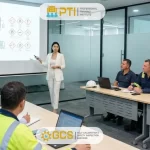
Comprehensive traffic marshal certification course covering vehicle reversing control, workplace traffic management
Length: 3.5 total hours
30 students
February 2026 update
Course Overview
The Banksman & Flagman Professional Training – Awareness Course is an essential safety module designed for the high-intensity environments of construction, logistics, and heavy industry. This 2026-updated curriculum addresses the evolving complexities of modern worksites, where the interaction between heavy machinery and personnel presents constant risks.
The program delves into the human factors of traffic management, exploring why communication breakdowns occur and how a professional flagman can mitigate these errors through disciplined observation and standardized signaling.
Participants will analyze the February 2026 safety updates, which incorporate new data on vehicle-to-person proximity sensors and how these technological advancements integrate with manual marshalling duties.
The course provides a deep dive into the legal framework of workplace transport, ensuring that every candidate understands their personal and corporate responsibility under contemporary health and safety legislation.
Instruction covers the dynamics of site layout, teaching students how to identify high-risk “choke points” and implement effective segregation strategies that keep pedestrians and moving plant machinery completely separate.
A significant portion of the overview is dedicated to risk assessment methodologies, training the banksman to perform rapid dynamic assessments as weather, lighting, or ground conditions change throughout a shift.
By focusing on operational continuity, the course ensures that safety does not come at the cost of efficiency, teaching marshals how to maintain a steady flow of traffic while upholding the highest protective standards.
Requirements / Prerequisites
Candidates must possess basic literacy and numeracy skills to interpret site maps, read safety signage, and document incident reports or daily vehicle logs accurately.
A minimum age of 18 is required to ensure compliance with insurance mandates and the maturity level necessary for high-responsibility safety roles.
Applicants should have adequate physical mobility, as the role requires standing for long periods, walking on uneven terrain, and executing clear, repetitive arm movements.
Strong visual and auditory perception is mandatory; students must be able to see vehicle indicators from a distance and hear reversing sirens or radio instructions over ambient site noise.
Participants are expected to bring or be familiar with standard Personal Protective Equipment (PPE), including high-visibility vests (Class 3), safety boots, and hard hats.
While no prior experience is mandatory for this awareness level, a foundational understanding of site safety is beneficial to grasp the technical terminology used during the 3.5-hour session.
Skills Covered / Tools Used
The course emphasizes the standardization of hand signals, moving beyond basic waving to a precise “language of the hands” that eliminates ambiguity for drivers of large articulated vehicles.
Techniques for using light wands and illuminated batons are covered extensively, preparing marshals for low-light conditions, night shifts, and adverse weather operations.
Students are trained in two-way radio etiquette, learning “clear-voice” protocols and emergency “stop” commands that prevent crossed signals and communication lag.
Instruction includes the use of temporary traffic control tools, such as specific cone configurations, portable barriers, and high-intensity signage to redirect flow during maneuvers.
Blind spot mapping is a core skill taught; participants learn to visualize the driver’s perspective from various cabin heights to ensure they always remain in a visible and safe “line of sight.”
The course introduces environmental hazard identification, teaching students to check for overhead cables, ground stability, and potential crush zones before a vehicle begins its maneuver.
Marshals are taught conflict resolution skills to handle non-compliant drivers or distracted pedestrians who may inadvertently enter a restricted vehicle zone.
Benefits / Outcomes
Graduates receive a professional Traffic Marshal competency certificate, which serves as a recognized credential for employment in construction, shipping, and large-scale event management.
Employers benefit from drastically reduced incident rates and lower insurance premiums by proving their staff are trained to the 2026 industry benchmarks.
The training fosters increased driver confidence, as vehicle operators can rely on the precise and predictable movements of a certified banksman.
Participants gain enhanced situational awareness, a transferable skill that improves overall safety and alertness in any industrial or high-risk work environment.
Completion of the course provides a pathway to supervisory roles, as traffic management is a critical component of site foremanship and safety officer positions.
The program ensures compliance with international safety standards, making the certification valuable for those seeking work on global infrastructure projects.
PROS
The 3.5-hour condensed format allows for rapid certification without requiring significant downtime from regular work duties.
Small class sizes of 30 students ensure an interactive environment where specific site-related questions can be addressed by the instructor.
The 2026 curriculum update ensures that the training is relevant to the newest types of electric and autonomous site vehicles.
Direct practical application means that the skills learned in the morning can be utilized on the worksite in the afternoon.
Focus on professionalism and authority empowers the marshal to take charge of their zone with confidence and clarity.
CONS
This is an awareness-level course, meaning those looking to manage specialized heavy-lift cranes or railway-specific signaling may require additional niche certifications beyond this general training.
Found It Free? Share It Fast!
The post Banksman & Flagman Professional Training – Awareness Course appeared first on StudyBullet.com.